|
First of all, when did you start making music yourself?
|

|
Mr. Rei Harakami
(hereinafter referred to as R):
|
I was born in 1970, but I wasn't able to type anything out of the
blue,
so when I was in elementary school and junior high school,
I was playing around with recording various things on cassette tapes. Apart from that, I was also
taking piano lessons, but I had no interest in the piano at all. |
|
| |
 |
| It was overdubbed onto tape. |
|
|
|
R:
|
I wasn't really composing the music that well. I didn't start doing
anything
musical until I entered junior high school. While playing in a band with friends, I was also
making overdubbing recordings on two tape decks at home. Even back then, synths were still
expensive. I didn't start typing until I was in my 20s. |
|
|
| |
| What kind of music were you making? |
|
|
R:
|
What? Well, I don't really understand (lol).
I think you'll understand if you listen to it, but I don't make music with the mindset of wanting to
make techno or rock,
so I try to do things that don't make any sense to the best of my ability. |
|
| |
| Do you feel like you were doing something sonically
fun?
|
|
|
R:
|
Well, it's more the sound than the music.
It's a world where I'm really experimenting all the time.
Although I would play the songs I wrote to my friends as a joke,
I didn't send them anywhere as a demo tape.
|
|
|
 |
| |
| What was the first instrument you used in computer
music? |
|
|
R:
|
When I was a student, my university had a combination of the SC-55MK2
and EZ Vision, and I thought it was simple and easy to understand, and that I could buy it if I
tried
hard enough. |
|
| |
| But you need a Mac, right? |
|
|
R:
|
Mac had an SE-30 that his older brother had given to him so he could buy a new one.
So, I thought I could buy a driving set for about 200,000 yen,
so I bought the SC-88, which had just been released, instead of the SC-55MK2.
|
|
 |
|
| |
| What was the main reason you decided to do the typing
yourself? |
|
|
R:
|
I had experience with bands and home recording, and I had some seniors who were already doing it, so
I
thought I'd be able to learn from them.
However, the main reason was that the combination of EZ Vision and Sound Canvas was easy to
understand. |
|
| |
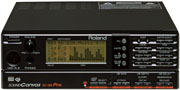
| The one you're currently using mainly is the Sound Canvas SC
series SC-88Pro, not the SC-88. |
|
|
|
R:
|
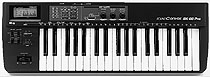 |
| SK-88Pro |
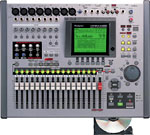
that's right. Basically two SC-88Pros. I also use SK-88Pro and VS-2000CD.
Up until the third album, ``Red Curb,'' I created the entire record using the SC-88Pro,
and then just added a total EQ at the end.
This time, the album was a little different, and I recorded the two channels of the SC-88Pro
onto the VS-2000CD, as well as a separate version of the tracks, and compared them.
I wanted to try which one was better.
|
|
| |
| Do you have any other effects added? |
|
|
R:
|
I have VS8F-2 installed. To process the dub live, I used delays and deep reverb.
|
|
| |
 |
|
Isn't there input using faders or knob controllers? |
|
|
|
R:
|
I don't really use so-called MIDI controllers. He uses commands on the sequencer and inputs
with the mouse.
For example, to create a pitch bend expression, try moving the bender and recording the MIDI
data, and save the interesting parts.
When I look at the data and realize that it's something like that, I replay it cleanly and
record it. |
|
|
| |
| Is your typing based on rhythm? |
|
|
R:
|
No, there are many things. In the case of remixes, there are particular constraints
on the melody, so I start with some rough chords to fit it.
Well, it feels like I'm making it by moving my hands and trying it out.
I think it's interesting that you can discover things on your own while doing so. |
|
| |
|
Are effect changes also made using control change data? |
|
|
R:
|
If necessary. For me, the most important effect is the pan delay of the SC-88
series.
In the preset state, the balance is uneven, so center it.
This allows the delay to alternate between left and right when the sound is playing in the center.
This is my favorite sound field. |
|
| |
| Do you also use random pans? |
|
|
R:
|
I use it sometimes. Also, my favorite insertion effects are distortion/overdrive.
I like that when I add a flanger to it and make it sound as thin as possible, it makes it sound like
it's being fed into an amp. Also, 3D panning, which is displayed as 3D AUTO, moves not only left and
right but also in depth.
I really like that too. |
|
| |
| I heard that you also use the VS-2000CD for live
performances. |
|
|
|
R:
|
I bought a VS-880EX in 1998 and used it as a mixer, and when I performed
live, I would just bring it with me and mix it on the spot, use effects, and do things like
dub processing. . The reason why I replaced it with the VS-2000CD last year is that it has
more tracks, of course, but it also fits in a standard rack. I thought it was small and
portable.
|
|
|
|
| |
| What are the differences between VS-2000CD and
VS-880EX?
|
|
|
R:
|
There's a 5-6 year gap between products being released, so it's completely different. The EQ width
increased by about 1.5 times, and I was impressed by how effective it was. |
|
| |
|
What do you think about the specifications? |
|
|
R:
|
It's convenient that the display lights up. The VS-880EX didn't have a backlight, so I had to use
the
light every time I performed live.
|
|